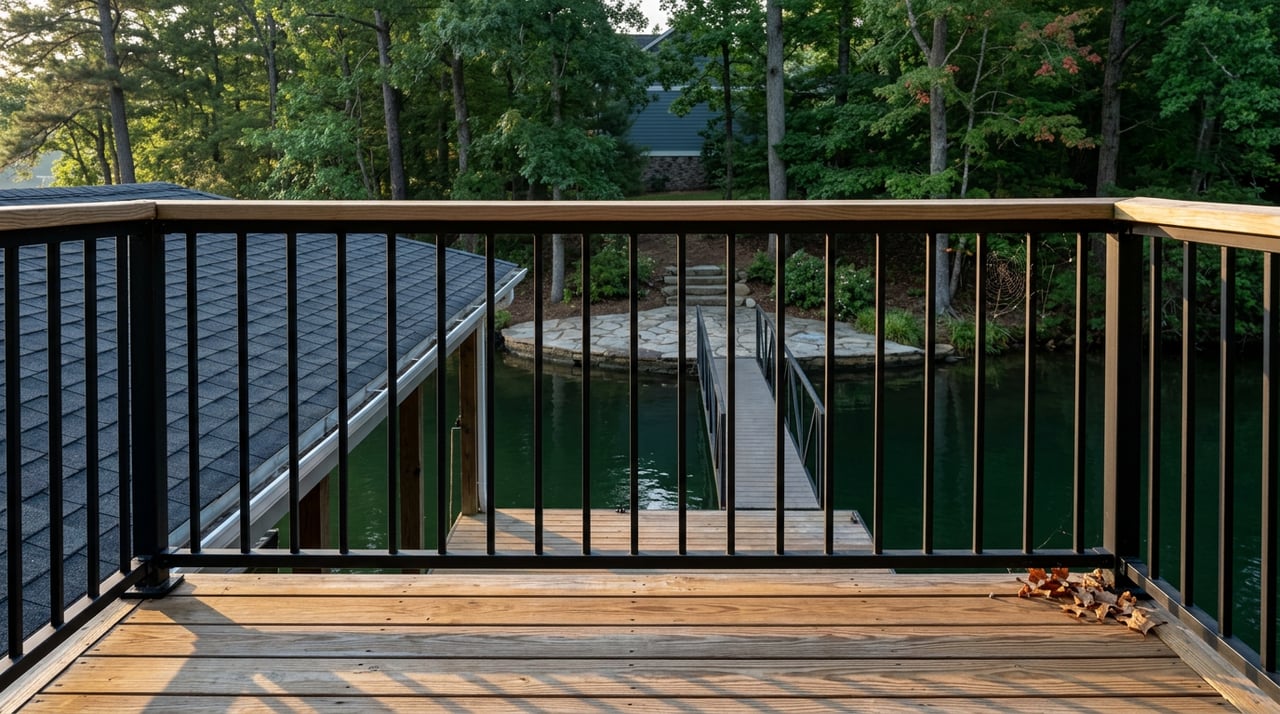
The 1999 Line Running Through Hiwassee's Dock Rights
September 3, 2026
September 3, 2026
A buyer walks two lots in Hiwassee on the same Saturday. Same road, same slope down to Big Creek, same view across to Mountain Lake Marina, same asking price within a few thousand dollars. Six weeks later, one closing sails through. The other stalls when the title company flags a dock that was never legally theirs to convey the way the listing implied.
The difference was not the lot. It was a date. November 1, 1999, the day the Tennessee Valley Authority's Shoreline Management Policy took effect and split every waterfront lot on Norris Lake into one of two regulatory categories that determine what you can build, what you inherit, and what a seller actually has the right to hand you at closing.
Most people shopping Hiwassee compare acreage, square footage, and the view toward the Cumberland Mountains. Those matter. But on a lake governed entirely by federal shoreline permits, the variable that moves price the most is one almost nobody asks about until it's too late to matter: whether the dock rights attached to that lot survive the sale, and in what form.
Here is the part that catches buyers off guard every year on this lake. A Section 26a permit, the federal approval required for any dock, boathouse, or shoreline structure on TVA reservoir land, does not transfer automatically when a property changes hands. TVA is explicit about this on its own buying and selling guidance page: the new owner has 60 days from closing to apply for the permit in their own name.
Skip that window and the existing structure stops being a grandfathered convenience and starts being a liability. TVA treats a late application the same way it treats a request for a brand new dock, subject to whatever the current rules require rather than whatever the seller's original permit allowed decades ago.
The fees reflect that gap. Transferring an already-permitted dock into your name runs a few hundred dollars. Applying as if the dock doesn't exist yet, because you missed the window or the structure was never properly permitted in the first place, runs several times that and can trigger a full review under today's standards rather than the standards in place when the dock was originally built.
TVA's Shoreline Management Policy didn't just add paperwork. It drew a permanent line based on when a subdivision was platted, and that line still shapes what a dock can look like today.
| Platted before November 1, 1999 | Platted after November 1, 1999 | |
|---|---|---|
| Maximum dock footprint | 1,800 square feet | 1,000 square feet |
| Basis for eligibility | Recognized as "preexisting development" under federal regulation | Standard limit under the current Shoreline Management Policy |
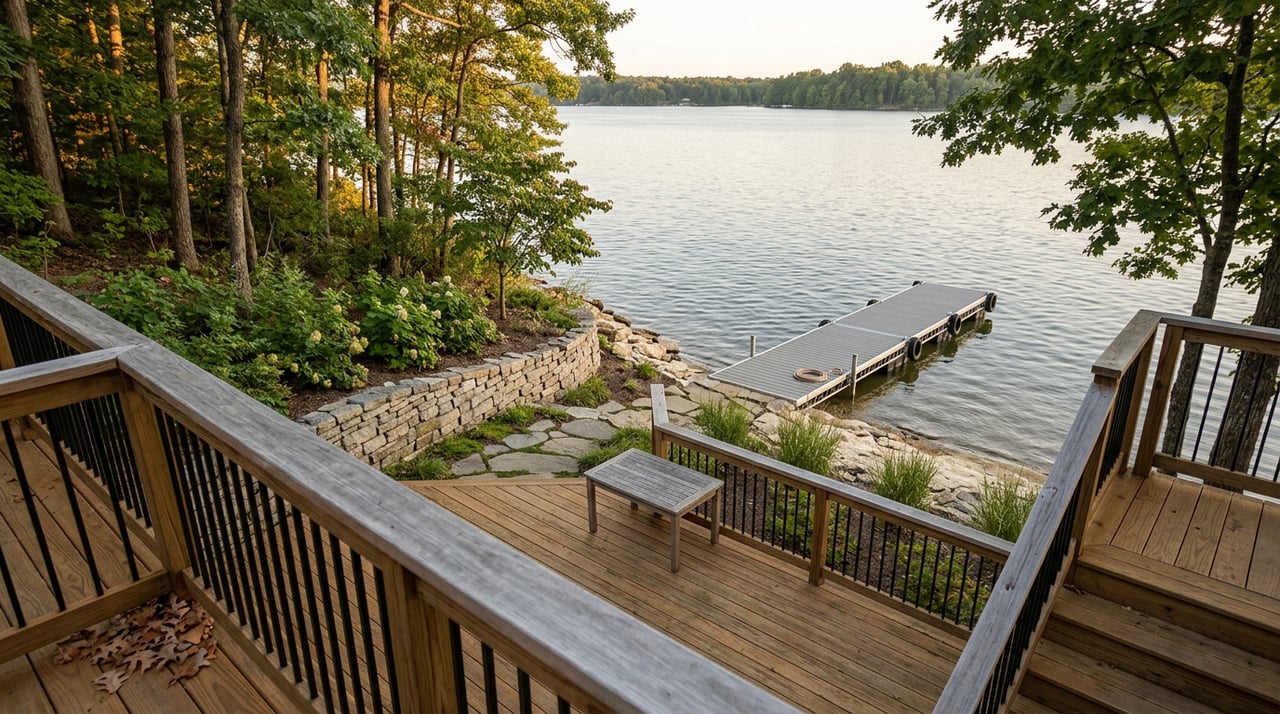
That 800 square foot gap is not trivial on a lake where a dock functions as an extension of the living space, boat storage, and the thing that makes a weekend feel like a weekend. A lot that qualifies as preexisting development can carry a two-slip dock with room for a swim platform. A lot platted after the cutoff is capped at roughly half that, full stop, regardless of how much shoreline the lot actually has.
Hiwassee and Hiwassee II are recorded as separate developments on Norris Lake, which is exactly the situation this rule was written for. Sharing a name does not mean sharing a platting date, and a buyer comparing a lot in the original section against one in the second phase should not assume the dock rights are identical just because both are called Hiwassee. TVA's own regulatory language extends preexisting status to any parcel within a quarter mile of a facility permitted before the 1999 cutoff, even outside a formal subdivision, which means the honest answer to "what can I build here" sometimes depends on what your neighbor built forty years ago rather than anything printed on your survey.
This is precisely why one recent Hiwassee II land listing made a point of noting that TVA's interactive maps confirmed the parcel carried the rights to apply for a dock permit at all. That confirmation is doing real work in the listing. It is answering a question that a comparable lot two streets over might not be able to answer the same way.
The most expensive surprise on this lake isn't the missing permit. It's the dock that has one, but not for what's actually built.
TVA's rules allow a second story on a covered dock only as an open deck with railing. The moment that upper level gets a roof or gets enclosed with siding or screening, a popular upgrade for shade and storage, it falls outside what the original permit authorized. TVA is direct about the consequence: if the second story is covered, it will likely have to be removed.
That is not a hypothetical. It is the exact kind of structure a buyer walks past during a showing, assumes is included in the sale as shown, and later learns during the permit transfer process was never legally enclosed in the first place. Only a dock built exactly as previously approved qualifies for transfer under the new owner's name. A modified structure, even one that has stood for years without complaint, can force a choice between an expensive rebuild to the original specifications or a new application under current standards, footprint caps and all.
None of these questions show up on a standard listing sheet. They show up in the closing file, sometimes after an inspection period has already closed.
Campbell County's broader housing market gives this extra weight right now. As of July 2026, the county carried 238 active listings with a median asking price of $350,000, sitting on the market a median of 81 days before finding a buyer. That's real time for a buyer to dig into permit history before writing an offer, and real leverage to ask a seller to sort out a transfer or a covered dock violation before closing rather than after.
In that kind of market, a verified, properly transferred, preexisting-development dock permit isn't a bureaucratic detail. It's one of the few pieces of a Hiwassee lot that holds its value regardless of where the broader market goes, because TVA isn't issuing more 1,800 square foot allowances and isn't going to start.
Can I check a lot's platting date myself before making an offer? You can request information about a specific location directly from TVA's Public Land Information Center, and a title search will show when the subdivision plat was recorded. Neither takes long, and both are worth doing before the inspection period runs out.
What if the dock was never permitted at all? TVA does not assume a structure is grandfathered just because it's been there a while. Unpermitted structures are treated as violations subject to removal and penalties, not as automatic preexisting development.
Does this apply to lots without an existing dock too? Yes. The same 1,800 versus 1,000 square foot cap applies to a brand new dock application on a vacant or unbuilt lot, based entirely on when that lot's subdivision was platted, not on when you happen to file the paperwork.
If you're comparing Hiwassee lots and want someone who checks the platting date and the permit history before you write an offer, not after, Alco Builders and Realty works this exact stretch of Norris Lake shoreline every week. Schedule a consultation and we'll walk the dock rights with you before the numbers on the listing sheet become the only thing you know about the property.
We pride ourselves in providing personalized solutions that bring our clients closer to their dream properties and enhance their long-term wealth.