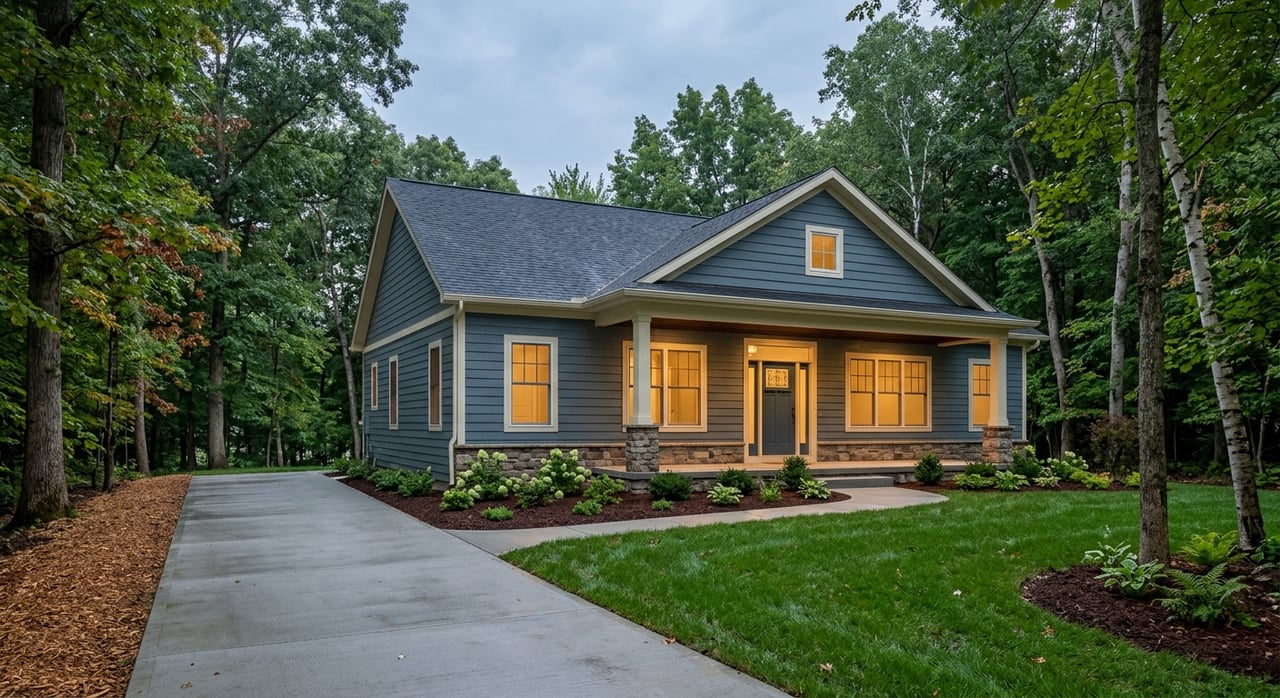
From Homesite To Move-In Day In Whisper Creek
July 9, 2026
July 9, 2026
Buying a homesite in Whisper Creek can feel exciting right up until the questions start. Who handles the permit? What does a PUD homesite really mean? When do septic, driveway, and inspection steps happen? If you want a smoother path from contract to keys, it helps to understand the local sequence before construction begins. This guide walks you through what to expect in Whisper Creek so you can move forward with more clarity and less stress. Let’s dive in.
Whisper Creek is described by Alco as a gated community near the Cumberland Mountains and Norris Lake, and its homesites are identified as PUD homesites rather than standard lots. That matters because a planned unit development, or PUD, is a specific ownership and project structure.
In a PUD, you generally own the homesite and the home itself, while a homeowners association typically owns or maintains shared common areas and collects required assessments. In other words, a PUD is not just another word for HOA. The PUD is the development structure, and the HOA is usually the group that manages common elements and fees.
That distinction matters early in the process. Lenders may review project-level details for PUD properties, and your closing documents may include recorded items such as declarations, bylaws, covenants, conditions, and restrictions.
When you buy in Whisper Creek, you are not only choosing a homesite. You are also stepping into a development structure that may include common-area maintenance and mandatory association assessments.
That does not mean HOA documents replace local building rules. LaFollette’s building-permit form states that private deed restrictions or subdivision restrictions are not enforced under city building codes. So you need to treat association rules and government permits as two separate tracks.
A good rule of thumb is simple. Review the community documents carefully, but also confirm every city or county requirement before site work starts.
One of the first steps is figuring out which local office has authority over your homesite. This can affect permits, reviews, paperwork, and timing.
If the homesite is within LaFollette city limits, the city Codes Department handles building permits, and the planning commission reviews site plans for new construction. If the property is outside city limits, Campbell County states that building permits are issued by the county clerk.
This is the first box to check because the rest of your process flows from it. Before you finalize construction plans, make sure you know whether you are working with city or county offices.
Before dirt work begins, several practical items need attention. In Campbell County, a septic permit must be obtained before a building permit is issued. TDEC also says a septic permit should always be secured before dirt work or construction of the building pad begins.
If your house plan changes later, you may need to revisit that permit. TDEC notes that changes to bedroom count, site plans, or house plans that affect the septic area can require a modification permit.
Access matters too. Campbell County requires a driveway permit for a new driveway connecting to a county road. If your homesite is within LaFollette, the permit application also asks about sewer connection, floodplain status, grading approval, and whether a foundation survey is needed before land-disturbing activity.
A smoother build usually starts with the right people in place early. LaFollette’s permit application asks for information on the owner, contractor, architect or engineer, plumber, and mechanical contractor. That tells you these roles should be identified before or during permit submission.
Depending on your project, your team may also include a lender, surveyor, septic professional, county highway or city codes contact, and a title company or closing attorney. Each one touches a different piece of the process.
For many buyers, this is where local guidance matters most. Coordinating dates, documents, and handoffs across a lender, contractor, septic review, driveway approval, and permit office can be a lot to manage on your own.
New construction in this area is not usually a same-week process. If the homesite falls under LaFollette review, the planning commission meets on the fourth Thursday of each month at 5:00 p.m. and reviews site plans for new construction.
The city permit form states that residential applications require two site plans and one construction plan. It also notes that grading permits must be issued before land-disturbing activity begins.
This is why buyers should avoid thinking of a homesite purchase as the finish line. In many cases, it is really the start of a sequence that includes design decisions, document collection, review timing, and permit approvals.
If you want a simple roadmap, the strongest local order looks like this:
This order helps you avoid expensive do-overs. It also helps keep your lender, builder, and permit contacts aligned.
Inspections are a normal part of the build process, not a sign that something is wrong. Where Tennessee’s state residential code program applies, state-contracted inspectors handle foundation, framing or rough-in, and final inspections.
If an inspection is not passed the first time, one free reinspection is allowed. LaFollette’s permit form also states that inspections generally must be scheduled at least one business day in advance.
That means timing matters. Your builder should plan ahead so the project does not stall while waiting for the next inspection window.
As exciting as the final stretch can be, move-in does not happen the moment construction looks complete. LaFollette’s permit form states that a building or structure may not be used or occupied without approval for a certificate of occupancy or certificate of completion.
This final approval is an important checkpoint. It confirms that the project has moved through the required process before you begin using the home.
For buyers, this is the step that turns a construction project into a home you can actually occupy. It is also one more reason to stay organized from the start.
Some buyers consider acting as their own builder. Tennessee does allow a homeowner to build a residence for personal use, but only under specific conditions.
The home cannot be built to sell or lease, and the homeowner must not have received a homeowner building permit in the prior 24 months. Because that path is narrower than hiring a licensed general contractor, it should be verified at the very beginning of the project.
There is also a contractor licensing issue to keep in mind. Tennessee requires a contractor’s license before bidding or negotiating a price on projects of $25,000 or more, and a restricted residential BC-A/r path applies to some residential work under $125,000.
A homesite purchase in Whisper Creek is not just about choosing a view or a floor plan. It involves PUD documents, local review timing, septic approvals, access questions, inspections, and occupancy signoff.
That is exactly where local experience can make the process feel more manageable. When you work with a brokerage that understands planned communities, lot sales, and new construction in the Norris Lake corridor, you are better positioned to spot questions early and keep the process moving.
If you are considering a homesite in Whisper Creek and want practical guidance from contract to closing and beyond, connect with Alco Builders and Realty to schedule a consultation.
We pride ourselves in providing personalized solutions that bring our clients closer to their dream properties and enhance their long-term wealth.